
By Jay Collins, MBA, CAPM® Product Manager, Charter Medical
As demand increases for more efficient biological fluid handling, cryopreservation, and blood management workflows, single-use filtration solutions play a critical role in maintaining sterility, reducing contamination risk, and improving operational efficiency.
Explore how filter sizes and materials benefit bioprocessing, cell therapy development, and blood management applications.
Single-Use Filtration in Bioprocessing & Cell Therapy Workflows
Custom medical filters support closed-system workflows in upstream and downstream applications, and can ultimately help therapy manufacturers reduce product loss, protect product integrity, and support regulatory and safety requirements in biomanufacturing and clinical environments.
Typically, filtration is used in the following stages of bioprocessing and cell therapy development:
Sterile Media and Buffer Preparation
Media and buffers must be sterile‑filtered to ensure they do not introduce contaminants into bioprocessing or cell therapy development workflows. Here, filtration is used to help maintain sterility during transfer, formulation, and fill/finish operations.
Closed-System Fill/Finish Operations
Filtration supports closed-system transfer and automated processing to help maintain sterility and product consistency throughout operations. Closed fill/finish systems rely on aseptic connectors, sterile filters, and pre‑sterilized single‑use assemblies to maintain sterility without exposing the biological product to the environment.
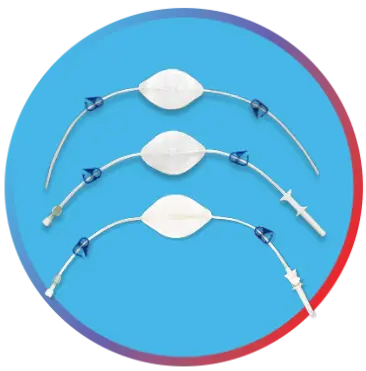
Single-use filters may be small, but their impact is big—especially for cell therapy processing applications that require reliable aggregate control without unnecessary product loss. Let’s briefly explore how they benefit cell therapy development workflows and blood management applications.
Filtration in Fluid Management Applications
Sterile processing is essential for workflows involving cell-based therapeutic products intended for patient administration. Filters constructed of biocompatible materials, such as polyethersulfone (PES) and nylon, enable the selective removal of cell aggregates and extraneous cell-based particulates during in-process and final filtration steps. Filters manufactured in accordance with ISO-8536-4 can support the removal of larger particulates and cell aggregates through 40µm and 150µm filtration while maintaining low hold-up volumes to reduce product loss and help prevent unwanted interactions with process fluids.
Filtration performance is influenced by filter surface area and flow rate, both of which must be optimized to maintain product yield and reduce the risk of clogging. Single-use assemblies commonly incorporate 0.2µm sterilizing-grade filters to support aseptic processing and microbial retention during fluid transfer operations. Polymer membranes made of PES and nylon are widely used due to their durability, chemical compatibility, and filtration abilities, as well as their aforementioned biocompatibility.
Additional design features of 40µm and 150µm filters support integration into single-use manufacturing environments, including:
- DEHP-free materials: Designed to enhance patient safety and align with global regulatory directives
- Bi-directional flow capability: Provides greater flexibility during fluid transfer and process integration
- Compatibility with DMSO (up to 20%) and isopropyl alcohol (IPA): Supports use with common solvents in bioprocess workflows
- Integration with sterile tube-welding systems: Helps preserve closed processes during manufacturing, reducing risk for contamination and product loss
- Optimized tubing lengths: Enable easier integration and greater process flexibility
- Cleanroom-compatible packaging: Supports efficient and safe handling and transfer in controlled manufacturing environments
One of the key advantages of in-line filters is the combination of efficient filtration surface area, low-flow restriction, and small hold-up volume, which helps support processing while preserving valuable cell product.
Why the 40µm Filter Size Matters
Filtration in Blood Management Applications
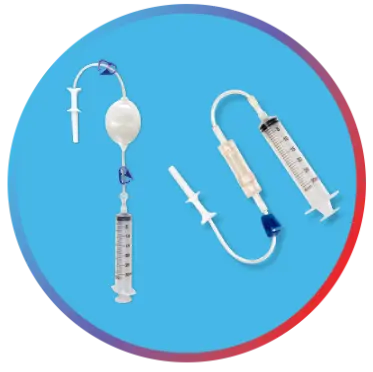
Beyond bioprocessing and cell therapy applications, custom single-use filtration solutions are also used in blood management, particularly for neonatal and pediatric transfusion. Neonatal syringe sets with integrated 40µm and 150µm filters are designed to deliver small aliquots of whole blood, red cells, platelets, and plasma.
These systems provide a closed, needleless blood-delivery method, reducing the risk of accidental needlesticks while maintaining the original expiration date of the primary blood unit. They also enable clinicians to prepare multiple aliquots from a single donor unit, helping limit donor exposure for neonatal patients.
With filter hold-up volumes below 5mL and compatibility with multi-bag aliquot systems, these filtration sets support safe and efficient administration of blood components in clinical environments.
Advance Your Sterile Processing with Single-use Filtration Solutions
Whether used in bioprocessing, cell therapy manufacturing, or blood management applications, single-use filtration solutions play a vital role in maintaining sterile processing and protecting product quality. Designed to enable low hold-up volumes and configurable formats – and built with biocompatible materials – single-use filters support safer, efficient fluid handling while providing the flexibility needed to adapt to evolving process requirements.
By engaging early with Charter Medical, companies can integrate portfolio or custom 40µm and 150µm filtration options into their workflows for formulation, cell separation, media preparation, and final fill. A collaborative approach can simplify scale-up, reduce process complexity, and support consistent performance across every phase of production to help life sciences companies more safely and efficiently deliver next-generation therapies to patients.
About The Author
Jay Collins, MBA, CAPM®, is the Product Manager at Charter Medical in Winston-Salem, North Carolina. Jay is responsible for managing Charter’s single-use portfolio, introducing new products and providing cross-functional project leadership. Jay leverages his experience in market research, product operations, and product management in the medical device and single-use industry to drive growth in global markets. Jay has a B.S.B.A. from the University of North Carolina at Charlotte and an MBA from Appalachian State University in Boone, NC.
About Charter Medical, LLC
Charter Medical, part of the Solesis family of companies, specializes in designing and manufacturing customizable single-use solutions for the advanced therapy, bioprocessing, and blood management markets. As an ISO 13485-certified and FDA-registered company, we provide high-quality, innovative solutions and services that support biological fluid handling, cell growth, and cryopreservation processing steps from early-stage development to scale-up for commercialization. From bio-containers and fluid transfer sets to filters and manifolds, Charter’s solutions help life sciences innovators turn bold ideas into lasting breakthroughs that enable industry-leading companies to bring their life-saving therapies to market.
Operating in North Carolina, USA, Charter Medical employs more than 150 employees between two sites in Winston-Salem.